
About Mining and Geological Engineers: Education and Career
Written by SayStudent Adminstration // 2013/03/06 // Career Planning // Comments Off on About Mining and Geological Engineers: Education and Career
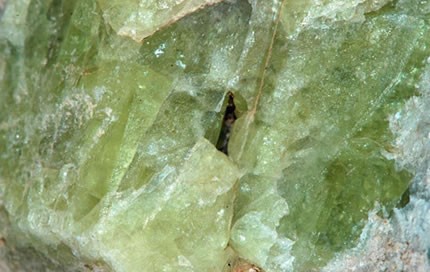
Mining and geological engineers are trained to locate and develop mining sites. Engineers must assess ground conditions to determine natural support and to find the best and safest way to extra minerals from any site. Such engineers will identify the equipment to be used onsite, assess the working conditions and develop a safety program to protect workers. These professionals routinely possess a degree in mineral engineering, with about 30 percent of individuals having an advanced degree.
Related Duties
Mining engineers choose locations to perform either underground or surface mining operations. These professionals find sites that are rich in minerals and begin the process for acquiring those materials.
Engineers must determine the safest and cleanest methods for extraction. They will review land maps and consider the impact of the project on the environment. Engineers will apply for the proper permits, assemble the appropriate equipment and put together a team to remove the minerals. They will work with senior management to devise an extraction plan that meets local, state and federal requirements. Engineers will also prepare technical reports, oversee the construction of shafts and monitor the day to day operation of the mine.
Education
About 70 percent of geological engineers have a bachelor’s degree in mineral engineering. The rest have advanced degrees including six percent with Ph.ds. Engineers are licensed by their state and must pass a state examination. Most are employed by large companies that also offer ongoing education and safety training.
Mining engineering programs are limited to a few schools and include the University of Utah, Missouri S&T, the University of West Virginia and the South Dakota School of Mines & Technology.
Mining engineers must possess strong mathematical skills and will also be adept at decision-making and logic. Engineers are problem solvers and will possess the analytical attributes to necessary in this field. Mining engineers must be able to communicate orally and in writing, and work well with senior managers, subordinates and government liaisons.
Salaries
Mining and geological engineers can expect to make an excellent salary. In 2011, the average national salary for this position was $84,300, well above the average salary for all engineers.
Bottom pay rates for mining engineers was a competitive $50,600 per year according to the U.S. Bureau of Labor Statistics. That pay represents what individuals in the bottom 10 percent of the field earn. Mining engineers in the 25th percentile earned $64,900 per year while those in the 75th percentile made $107,200. The top earners, those in the 90th percentile, could expect to make $136,800 or more per year.
Mining engineering is common to about two-thirds of all states with Oklahoma, California and Alaska offering the highest pay of any states. The average salaries in those states was above $100,000. On the bottom of the spectrum, salaries in states such as West Virginia, Florida an Ohio were the lowest in the nation, with salary averages coming in below $70,000 per year. Texas, Arizona, Colorado and West Virginia have the most mining engineers.
Job Outlook
The mining field is small and concentrated, with just 6,400 individuals working at mining engineers as of 2010. That number is expected to rise by about 10 percent by 2020 according to the BLS or slightly below the average for all jobs. Retirement and promotions to other positions within the large companies that routinely employ hiring engineers should help the job prospects of future candidates going forward. Those engineers with advanced degrees and training my find themselves better positioned to take on other opportunities in the field.
References
Summary Report for: 17-2151.00 – Mining and Geological Engineers, Including Mining Safety Engineers — http://www.onetonline.org/link/summary/17-2151.00
U.S. Bureau of Labor Statistics — Occupational Outlook Handbook: Mining and Geological Engineers — http://www.bls.gov/ooh/architecture-and-engineering/mining-and-geological-engineers.htm
Author Information
Joe Fernandez focuses on the mining and resource sector, providing valuable insight into companies that produce mining equipment such as mining pumps and light towers.


 college budgeting worksheet
 If you want to contribute tutorials, news or other student-related tips or stuff:
  Share our student library with your facebook friends:
  Do you have any ideas or suggestions you would like to make?
  If you like what we do, please subscribe to our
  All content Copyright © 2012-13 SayStudent.com. Part of nBuy Education Network.