
Why Precision Matters in Robotics Engineering
Written by publishingreporting@logicalposition.com // 2026/08/21 // Academics // Comments Off on Why Precision Matters in Robotics Engineering
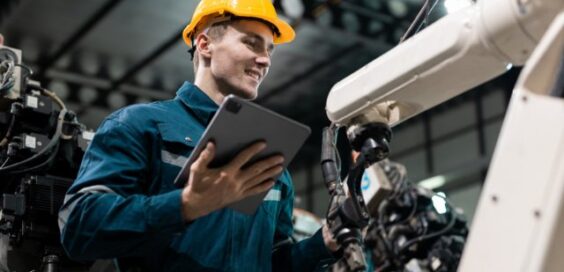
Robots can perform tasks that demand extraordinary consistency, from positioning components on an assembly line to assisting with delicate medical procedures. That capability depends on far more than sophisticated software. Every movement also relies on physical components fitting, aligning, and responding as engineers expect.
For students considering careers in mechanical engineering, electrical engineering, mechatronics, or automation, understanding precision provides an important foundation. Robotics combines several engineering disciplines, and minor variations in one part of a system can affect the performance of the entire machine. Keep reading to understand why precision matters in robotics engineering.
Precision Connects Design With Real-World Performance
Engineers may develop a robotic system using comprehensive digital models, simulations, and calculations. Manufacturing then turns those plans into physical components. No manufacturing process produces perfectly identical parts, however, so engineers specify acceptable ranges known as tolerances.
A shaft might have a slightly different diameter from another shaft manufactured from the same drawing. A mounting surface may sit a fraction higher or lower than its modeled position. Individually, these differences may seem insignificant. Combined, they can influence how a robotic system moves.
Small Errors Can Grow Through a Robotic System
A tiny positional error near the base of a robotic arm can create a larger error at the end effector. The farther the arm extends, the more noticeable that deviation may become.
Suppose a robot must place a component into a narrow opening. An alignment difference of a fraction of a millimeter at one joint could change the final position enough to cause a failed placement. Engineers therefore examine multiple potential sources of variation.
Mechanical Tolerances Affect Alignment
Every bearing, bracket, joint, gear, and mounting surface has dimensional tolerances. Engineers must determine whether those tolerances will still allow the system to meet its performance requirements.
They also study tolerance stack-up. This occurs when small dimensional differences from several components accumulate within an assembly. A single part may fall within its approved specification while the combined assembly still shifts farther than expected.
Sensors Need Accurate Physical Placement
Robots rely on sensors to understand their positions and surroundings. Encoders track motion, cameras support machine vision, and force sensors measure contact. Those devices only provide useful information when engineers install and calibrate them correctly.
For example, software may assume that a camera sits at a particular angle relative to a robotic arm. If the physical mount places the camera slightly outside that position, the robot could interpret its surroundings incorrectly.
Precision Matters During Assembly
Precision matters especially during assembly for robotics engineering. Robotics engineering does not end when designers finalize a CAD model. Assembly introduces another stage where accuracy matters.
Technicians and engineers must position components correctly, apply suitable fastener torque, check clearances, and verify alignment. Small adjustments sometimes bring assembled components closer to their intended geometry.
Aluminum shims in precision robotics assembly provide one example. Engineers can place a shim between mating surfaces to make a controlled spacing or alignment correction rather than forcing components into position.
This type of adjustment highlights an important engineering principle: precision does not always require redesigning an entire component. Sometimes a carefully measured change at an interface can improve the behavior of a larger assembly.
Repeatability Is as Important as Accuracy
Accuracy describes how closely a robot reaches its intended position. Repeatability describes how consistently it can return to the same position. The distinction matters because a robot can behave consistently without being perfectly accurate.
Imagine a robotic arm programmed to move to a particular coordinate. If it stops two millimeters away every time, it has strong repeatability but poor accuracy. Engineers may correct that predictable offset through calibration.
If the arm stops at a different location during every attempt, the problem becomes harder to solve. Mechanical looseness, inconsistent friction, component wear, or sensor issues could contribute to the variation.
Precision Can Influence Safety
Collaborative robots, rehabilitation systems, laboratory robots, and automated medical equipment may work within limited spaces where unexpected motion carries significant consequences. Engineers must understand how mechanical variation, sensor uncertainty, and control errors affect the system. A robot that moves beyond its expected boundary could strike nearby equipment or enter an area intended for a human operator.
Engineers also use safety systems that account for uncertainty. Physical guards, force limits, emergency stops, software boundaries, and redundant sensing can provide additional protection when something does not behave as expected.
Students entering robotics should recognize that precise design and safety engineering complement each other. Neither should depend on a single component or assumption working perfectly.
Manufacturing Choices Shape Robotic Performance
Material selection and manufacturing processes can determine how precisely engineers can produce a component. Machining, sheet metal fabrication, additive manufacturing, casting, and injection molding each have different capabilities and limitations. Engineers choose processes based partly on the tolerances a design requires.
A component with extremely tight tolerances may cost more to manufacture than one that permits greater dimensional variation. Engineers must decide where that extra precision produces meaningful value.
Not every surface needs exceptional accuracy. A decorative enclosure may tolerate more dimensional variation than a bearing seat or sensor mount.
Software Cannot Correct Every Mechanical Problem
Modern robots use advanced control systems that can compensate for certain physical imperfections. Calibration routines may identify offsets, while sensors can help controllers adjust motion in real time. Still, software has limits.
A loose joint can introduce unpredictable movement. Excessive backlash in a gear system can affect direction changes. In those situations, adding increasingly complex software may treat the symptom rather than the mechanical cause.
Robotics students benefit from learning to examine the entire system. Mechanical design, electronics, controls, and software influence one another, so troubleshooting requires an interdisciplinary perspective.
Precision Skills Can Help Students Prepare for Robotics Careers
Students interested in robotics can begin developing precision-oriented habits before entering a professional engineering environment. Laboratory courses provide opportunities to measure parts, compare experimental results with theoretical values, and examine sources of error. Robotics clubs and engineering competitions can also teach students how manufacturing tolerances affect designs that look straightforward on a computer screen.
CAD, machining, electronics, programming, and metrology skills can all contribute to a stronger understanding of robotic systems. Students should also become comfortable documenting measurements and testing assumptions. Engineering requires more than noticing that something does not work. Engineers need to identify why a system behaves differently from its design and determine which correction will produce the most reliable result.
Precision Turns a Concept into a Reliable Machine
Robotics brings digital instructions into the physical world. That transition creates countless opportunities for small variations to influence movement, sensing, reliability, and safety.
Successful engineers account for those variations rather than assuming real components will behave exactly like ideal models. They consider tolerances during design, measure components during manufacturing, verify alignment during assembly, and calibrate systems before operation.
For students exploring robotics engineering, precision is therefore more than a manufacturing concept. It represents a way of thinking about how small decisions affect complex systems. Developing that mindset can help future engineers build machines that perform predictably not just once, but throughout frequent real-world use.
Image Credentials: by eakgrungenerd, #1168153922


 college budgeting worksheet
 If you want to contribute tutorials, news or other student-related tips or stuff:
  Share our student library with your facebook friends:
  Do you have any ideas or suggestions you would like to make?
  If you like what we do, please subscribe to our
  All content Copyright © 2012-13 SayStudent.com. Part of nBuy Education Network.